
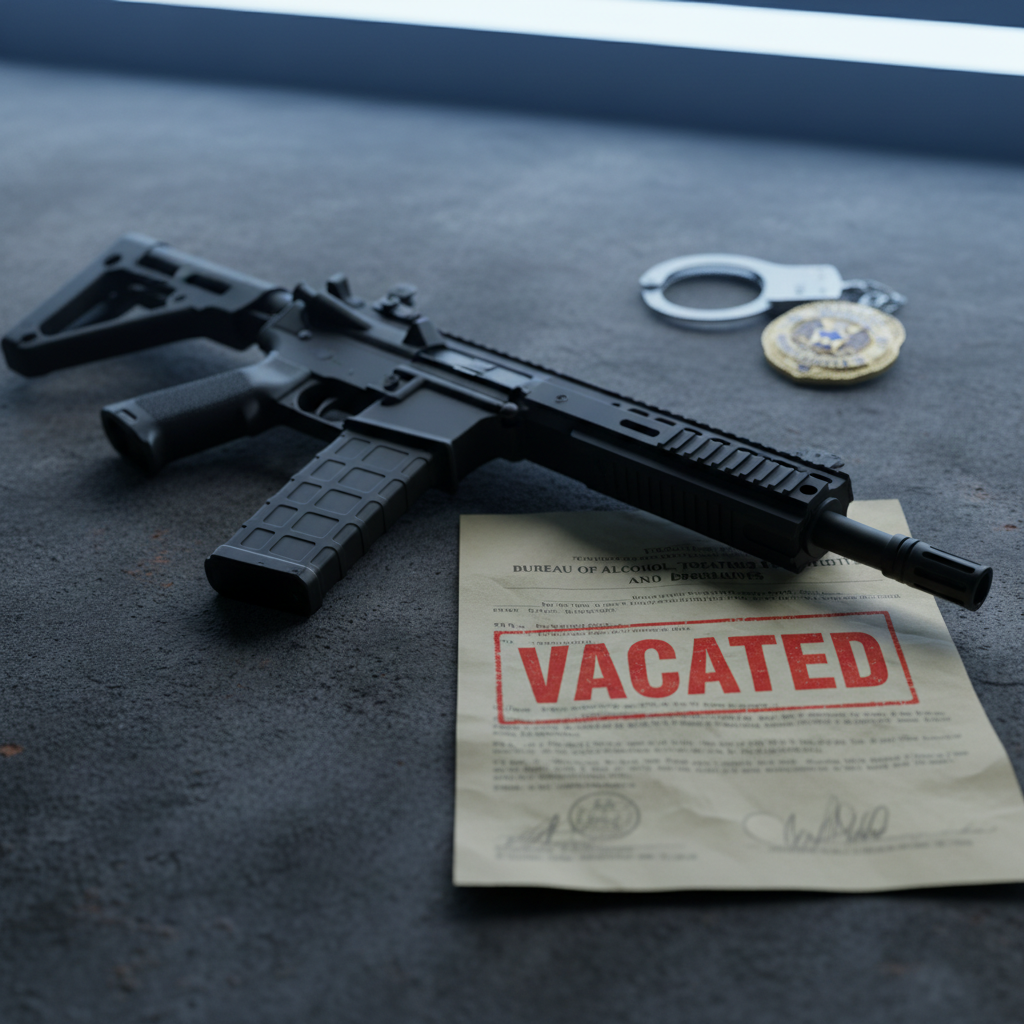
The Biden administration's pistol brace rule is dead — universally vacated by federal court and dismissed by the Trump administration. Yet in a stunning March 2026 court filing, the ATF admitted it continues enforcing its interpretation that certain braced pistols constitute unregistered short-barreled rifles, a federal felony carrying up to 10 years in prison.
This regulatory limbo creates one of the most dangerous legal gray zones in the Second Amendment landscape. Gun owners with braced pistols face potential prosecution without clear guidance on which configurations the ATF considers illegal.
The Rule Is Gone, But Enforcement Continues
The ATF's argument centers on statutory interpretation versus regulatory enforcement. While the court vacated the specific pistol brace rule, the agency claims certain braced configurations still meet the underlying statutory definition of short-barreled rifles under the National Firearms Act — firearms with barrels under 16 inches and overall length under 26 inches designed to be fired from the shoulder.
Gun Owners of America calls this a "rogue crackdown," noting the ATF provides no published guidance on which braced pistol configurations trigger enforcement action. This leaves millions of gun owners guessing whether their legally purchased firearms suddenly make them federal felons.
The NFA Registration Trap
Adding complexity, Congress eliminated the $200 NFA tax on short-barreled rifles in the One Big Beautiful Bill Act. However, the ATF still requires NFA registration for firearms it deems SBRs — a process that can take months and includes extensive background checks, fingerprinting, and local law enforcement notification.
Gun owners caught with what the ATF considers an unregistered SBR face severe federal penalties, even if they purchased their braced pistol legally when manufactured and sold.
No Clear Guidance, Maximum Confusion
The most troubling aspect of this enforcement approach is the complete lack of published criteria. The ATF has not released:
- A list of problematic brace configurations
- Specific design criteria that trigger SBR classification
- Clear guidance on lawful modifications or uses
- Safe harbor provisions for existing owners
This regulatory vacuum forces gun owners to navigate federal firearms law without the agency's own interpretation guidelines — a dangerous position when criminal penalties are involved.
What Gun Owners Need to Know Now
If you own a braced pistol, understanding your legal exposure is critical. The ATF's enforcement appears focused on configurations that clearly demonstrate shoulder-firing intent, but without published criteria, any braced pistol could potentially face scrutiny.
Document Your Purchase
Maintain clear records showing your braced pistol was legally purchased as a pistol, not manufactured or modified into an SBR configuration. This documentation becomes crucial if enforcement action occurs.
Understand the Statutory Elements
The ATF must prove your braced pistol meets the statutory SBR definition: barrel under 16 inches, overall length under 26 inches, and designed to be fired from the shoulder. Each element presents potential defense arguments, but legal consultation is essential.
Consider Registration
While the $200 tax is eliminated, NFA registration remains an option for gun owners concerned about compliance. However, registration creates a permanent government record and may not provide complete protection if the ATF changes interpretation again.
Congressional Action Needed
Gun Owners of America has launched a campaign urging Congress to intervene and end what they term the ATF's "rogue enforcement." The organization argues that continued enforcement without clear regulatory guidance violates due process and creates an impossible compliance standard.
Congressional clarification could provide the definitive guidance gun owners desperately need. Until then, the legal landscape remains treacherous for braced pistol owners.
The Ammunition Connection
This enforcement uncertainty affects more than just firearms — it impacts ammunition choices too. Gun owners unsure of their legal status may hesitate to purchase appropriate ammunition for their platforms, potentially compromising training and preparedness.
At ZeroPoint Ammo, we understand that legal compliance enables confident training and use. Our precision-manufactured ammunition serves lawful gun owners across all platforms, from pistols to rifles, supporting whatever configuration the law clearly permits.
The pistol brace situation demonstrates why clear, consistent regulations matter. Gun owners deserve definitive guidance, not enforcement by interpretation. Until Congress or the courts provide clarity, caution and legal counsel remain the best protection against this regulatory trap.