
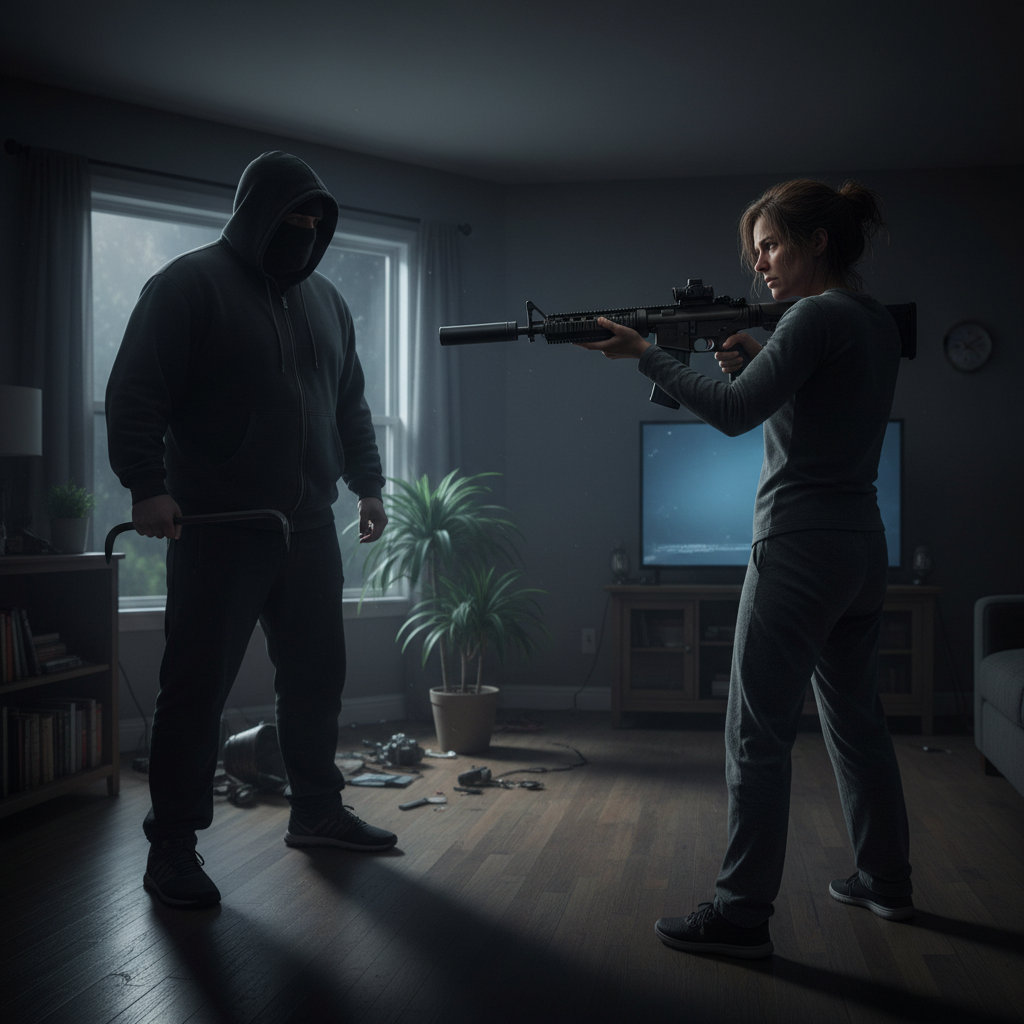
When selecting ammunition for home defense, the choice between calibers can mean the difference between effective protection and inadequate stopping power. .300 Blackout supersonic ammunition has emerged as a compelling option for homeowners seeking reliable defensive capabilities in close-quarters scenarios.
Understanding .300 Blackout Supersonic Performance
.300 Blackout supersonic loads typically achieve velocities between 2,200-2,400 feet per second from a 16-inch barrel, delivering substantially more kinetic energy than subsonic variants. This velocity translates to improved terminal ballistics and enhanced barrier penetration—critical factors in home defense situations where attackers may seek cover behind doors, walls, or furniture.
The cartridge's .30-caliber projectile, typically weighing between 110-125 grains in supersonic configurations, creates larger wound channels than smaller calibers while maintaining manageable recoil characteristics. This combination allows for faster follow-up shots and improved accuracy under stress.
Ballistic Advantages in Home Defense Scenarios
Supersonic .300 Blackout excels in several key areas that matter most in defensive applications:
- Barrier Penetration: The heavier bullet and higher velocity provide superior performance through common household barriers like drywall, wood doors, and glass
- Stopping Power: Increased kinetic energy transfer creates more immediate incapacitation potential
- Effective Range: Maintains lethal velocity and accuracy at typical home defense distances of 3-25 yards
- Expansion Characteristics: Quality hollow point designs expand reliably at supersonic velocities
Comparing Supersonic vs. Subsonic for Defense
While subsonic .300 Blackout offers hearing protection benefits and reduced muzzle flash, supersonic loads provide distinct defensive advantages. The increased velocity ensures reliable expansion of defensive projectiles and delivers significantly more energy on target—approximately 40-50% more kinetic energy than comparable subsonic loads.
For home defenders prioritizing immediate threat neutralization over noise considerations, supersonic ammunition represents the more effective choice. The temporary hearing damage from unsuppressed supersonic rounds, while undesirable, remains secondary to stopping an immediate threat to family safety.
Platform Compatibility and Practical Considerations
.300 Blackout supersonic ammunition functions reliably in standard AR-15 platforms with minimal modifications. The cartridge utilizes the same bolt and magazine system as 5.56 NATO, requiring only a barrel change for conversion. This compatibility makes it accessible to homeowners already familiar with AR-platform operation.
Barrel length significantly affects performance, with 10.5-16 inch barrels providing optimal velocity while maintaining maneuverability in confined spaces. Shorter barrels sacrifice some velocity but offer improved handling characteristics in hallways and doorways.
Ammunition Selection Criteria
Effective home defense requires ammunition engineered for consistent performance. Key selection factors include:
- Bullet Construction: Bonded or controlled-expansion hollow points prevent fragmentation while ensuring reliable expansion
- Powder Selection: Clean-burning propellants reduce fouling and maintain reliable cycling
- Quality Control: Consistent powder charges and bullet seating ensure predictable point of impact
- Primer Reliability: High-quality primers guarantee ignition under stress conditions
Legal and Practical Considerations
Home defenders must understand their local laws regarding ammunition storage, use of force, and liability. Most jurisdictions permit defensive use of supersonic rifle ammunition, but over-penetration concerns require careful consideration of home layout and neighboring structures.
Proper training with chosen defensive ammunition remains essential. Homeowners should regularly practice with their defensive loads to understand trajectory, recoil characteristics, and point of impact at relevant distances.
Storage and Maintenance
Defensive ammunition requires proper storage in climate-controlled environments away from temperature extremes and humidity. Regular inspection ensures primers remain properly seated and cases show no signs of corrosion or damage.
Rotating defensive ammunition every 12-18 months maintains peak reliability, with stored rounds transitioned to practice use. This rotation schedule ensures defensive loads remain fresh while maximizing ammunition investment.
.300 Blackout supersonic ammunition offers home defenders a potent combination of stopping power, barrier penetration, and platform compatibility. While noise and over-penetration concerns require careful consideration, the enhanced terminal performance makes it a compelling choice for serious defensive applications.