
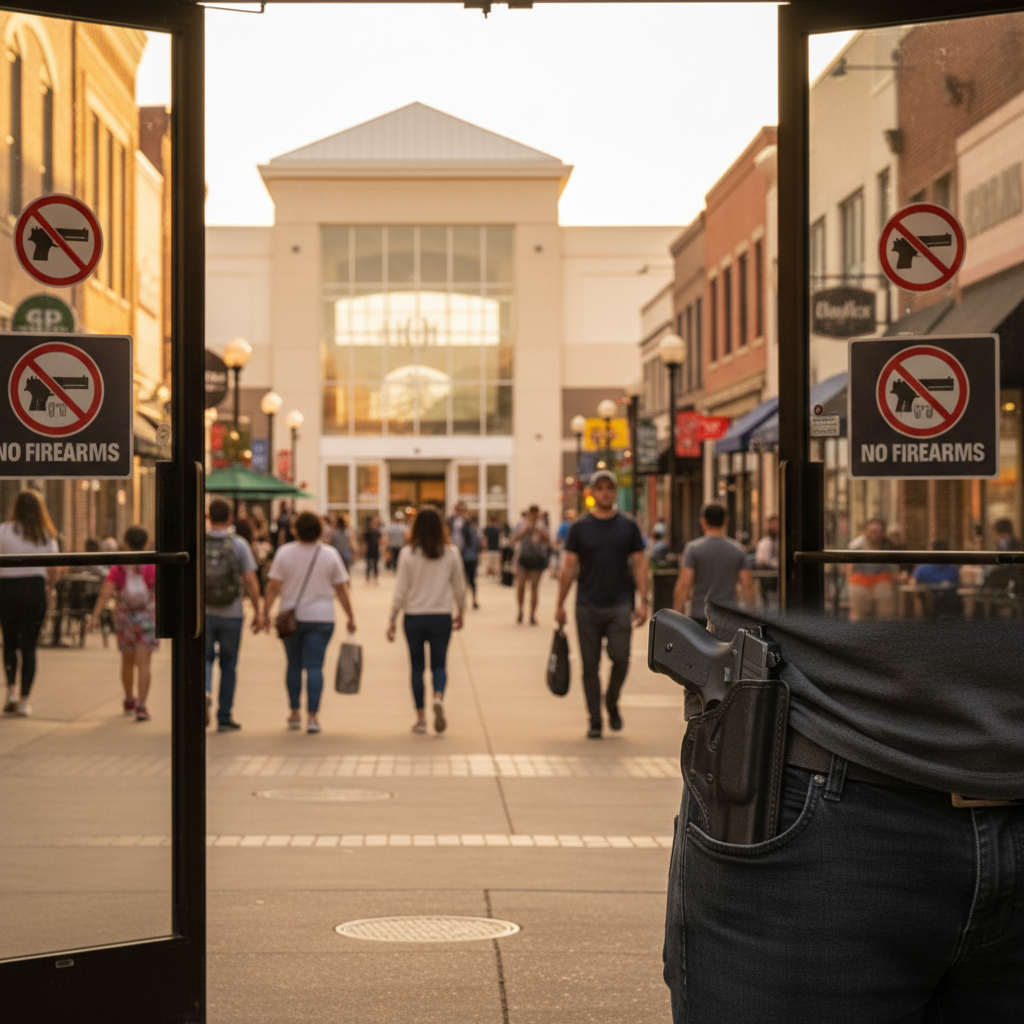
The Supreme Court's upcoming decision in Wolford v. Lopez represents one of the most significant concealed carry cases since the landmark Bruen ruling. At stake is whether states can effectively ban concealed carry in most commercial spaces by requiring explicit property owner consent, or if the Second Amendment protects your right to bear arms in businesses open to the public.
The Case That Could Change Everything
Hawaii's Act 52, enacted in 2023, flipped the script on concealed carry in private businesses. Instead of allowing concealed carry unless a property owner posts "no guns" signage, the law criminalizes concealed carry in commercial spaces unless the business owner provides express written permission. California implemented similar restrictions, creating a de facto ban on concealed carry in restaurants, shops, malls, and most other places where law-abiding citizens conduct daily business.
Petitioner George Wolford argues these laws gut Bruen's recognition of a "general right to be armed in public for self-defense." The core question: does the Second Amendment protect concealed carry on private property that welcomes the public, or can states make such carry presumptively illegal?
How States Stretched "Sensitive Places"
The Bruen decision acknowledged that governments could restrict carry in certain "sensitive places" based on historical precedent. The Court cited examples like schools, courthouses, and government buildings — locations with longstanding traditions of weapons restrictions.
However, states have aggressively expanded this concept. Beyond the traditional sensitive places, state laws now commonly prohibit concealed carry in:
- Public parks and beaches
- Public transportation systems
- Entertainment venues
- Places serving alcohol
- Private commercial property (without owner consent)
This expansion has created a patchwork where concealed carriers often cannot legally defend themselves in the places they're most likely to need protection — everyday commercial spaces where violent crime occurs.
The Property Rights Angle
Defenders of these laws argue they protect property owners' rights to control what happens on their premises. Under this view, business owners should decide whether customers can carry firearms, just as they control other aspects of their establishments.
However, Wolford's legal team counters that the Second Amendment creates a presumption in favor of carry rights. They argue that while property owners can certainly prohibit firearms through clear signage or verbal notice, the default position should favor the constitutional right to bear arms, not ban it unless explicitly permitted.
Implications for Concealed Carriers
A ruling favoring Wolford could invalidate similar laws in multiple states, restoring the traditional approach where concealed carry is legal unless specifically prohibited by property owners. This would mean:
- No more requirements for written property owner consent
- Return to "no weapons" signage as the primary restriction method
- Greater consistency in carry laws across jurisdictions
- Reduced legal liability for law-abiding carriers
Conversely, if the Court sides with Hawaii and California, it could encourage other states to adopt similar "permission required" frameworks, dramatically restricting where concealed carriers can legally bear arms.
What This Means for Gun Owners Today
While we await the Court's decision, expected by late June 2026, concealed carriers must navigate the current legal landscape carefully. Know your state's specific requirements regarding private property carry. Some states honor clear signage, others require verbal notice, and some — like those in question — presumptively prohibit carry without owner consent.
The fundamentals remain unchanged: responsible concealed carriers should always be aware of local laws, respect private property rights, and prioritize de-escalation and avoidance over confrontation. Quality training and consistent practice with reliable ammunition remain essential regardless of where you're legally permitted to carry.
The Bigger Picture
Beyond the immediate legal questions, Wolford v. Lopez reflects a broader tension between expanding concealed carry rights and state efforts to limit where those rights can be exercised. The case will likely influence not just sensitive places doctrine, but also how courts balance Second Amendment rights against state regulatory authority.
For the millions of Americans who carry concealed for personal protection, this case could determine whether their constitutional rights remain meaningful in the places where they're most vulnerable — or whether those rights become increasingly theoretical as states carve out ever-larger areas where self-defense is prohibited.
The Court's decision will shape the future of concealed carry law for years to come, potentially affecting every American who exercises their Second Amendment rights in public spaces.