
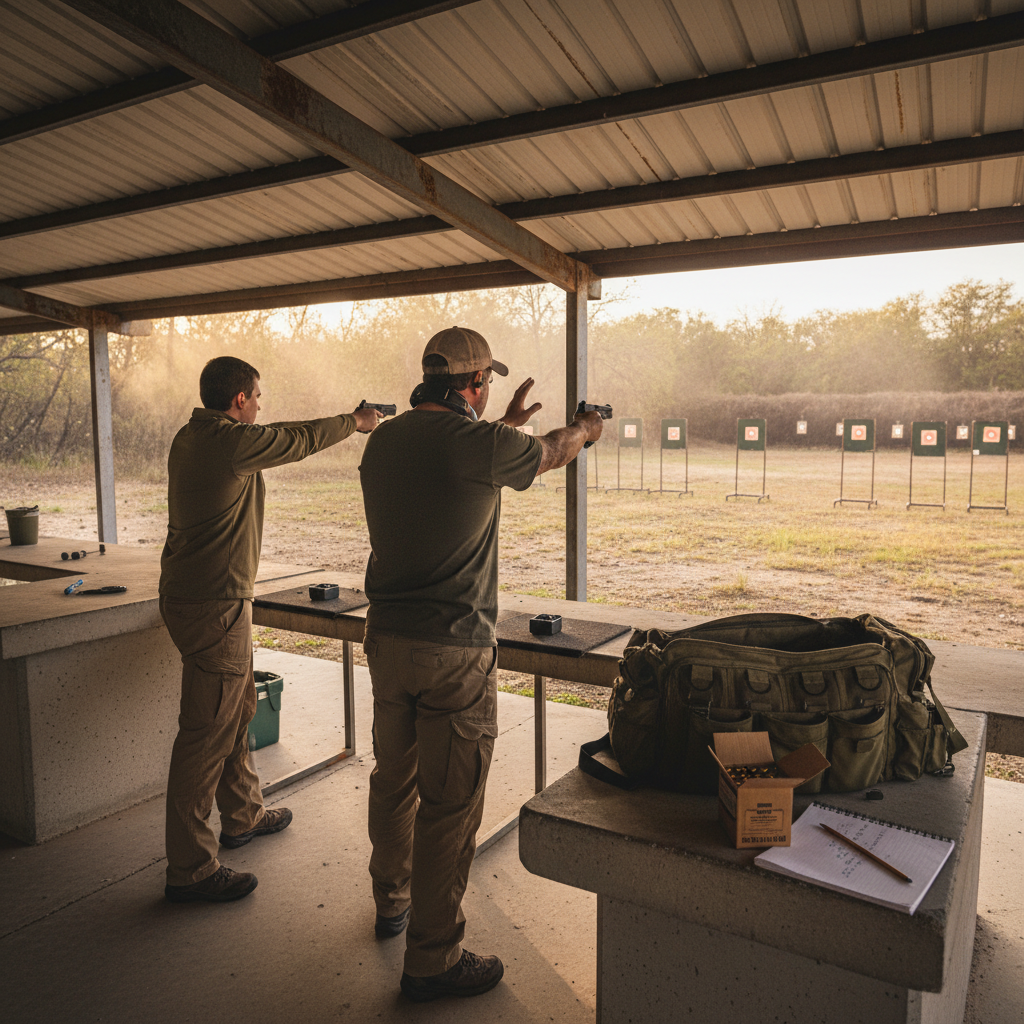
Here's an uncomfortable truth most shooters need to hear: the $3,000 rifle sitting in your safe isn't making you a better marksman. That custom build with the match-grade barrel and precision trigger? It's only as accurate as the fundamentals you've developed behind it.
We've watched countless shooters invest heavily in premium equipment while neglecting the one upgrade that actually transforms performance—structured instruction. A shooter with solid fundamentals will consistently outperform expensive gear in untrained hands. Professional training provides what garage practice cannot: systematic feedback on your technique, correction of developing bad habits, and a curriculum that builds skills in logical sequence.
The Austin shooting community has access to exceptional training resources, but choosing the right instructor and facility requires understanding what separates genuine skill development from expensive range time.
What Makes a Training Facility Worth Your Investment
Before committing to any class, evaluate the instructor's background and credentials. Military, law enforcement, or competitive shooting experience provides meaningful context for instruction, but teaching ability matters more than impressive credentials. The best instructors translate complex concepts into actionable steps and provide immediate feedback during live fire.
Class size directly impacts learning quality. Smaller groups mean more individual attention and faster skill development. We've seen too many "training" sessions that were essentially supervised range time with thirty students and one instructor. That's not instruction—it's crowd management.
Facility capabilities should match your training goals. Precision rifle instruction requires longer distances and stable shooting positions. Defensive pistol training needs movement space and varied target presentations. The range layout should support the curriculum, not constrain it.
Look for structured progression rather than random skill sampling. Quality programs build fundamentals systematically before advancing to complex techniques. Each class should connect logically to the next, creating genuine skill development rather than entertaining one-off experiences.
Safety culture becomes apparent immediately. Professional facilities maintain consistent safety standards, enforce range commands without exception, and create environments where students can focus on learning rather than worrying about unsafe behavior around them.
Austin-Area Training Options
The greater Austin area offers diverse training opportunities across multiple disciplines and skill levels. Each facility brings different strengths and specialties to the local shooting community.
Range USA in Pflugerville provides both indoor range access and structured instruction programs. Their pistol fundamentals classes typically run around $100-150 for group sessions, with private instruction available at premium rates. Students should expect safety briefing, fundamentals review, and live fire practice with coaching feedback. The indoor environment allows year-round training regardless of weather conditions.
The Range at Austin in South Austin combines retail, range access, and instruction under one roof. Their defensive pistol courses range from $75-125 for group classes, with specialized programs for concealed carry license holders. New students should bring eye and ear protection, while rental firearms and ammunition are available on-site.
Texas Firing Line in Walburg offers outdoor training with longer-distance capabilities. Their rifle programs take advantage of extended ranges not available at indoor facilities, with class pricing typically ranging from $150-250 depending on duration and specialization. The outdoor setting provides realistic training conditions but requires weather consideration.
Lone Star Gun Range maintains active instruction programs alongside their indoor range facilities. Group classes generally run $80-120, with emphasis on fundamental skill development before advancing to specialized techniques. Their controlled indoor environment supports consistent training conditions.
TNT Gun Range and Training Center in Pflugerville combines range access with comprehensive instruction programs. Classes typically range from $100-175, covering both pistol and rifle disciplines. Students benefit from immediate range access for practice following instruction.
Austin Pistol Club focuses on competitive shooting disciplines and fundamental marksmanship. While primarily member-oriented, they offer training opportunities that emphasize precision and consistency. The competitive environment pushes students beyond basic proficiency toward genuine skill mastery.
Thunderbird Field Sports in the Lockhart area provides outdoor training with varied terrain and distance options. Their programs range from $125-225, depending on complexity and duration. The outdoor environment supports realistic training scenarios not possible in indoor facilities.
For current pricing and class schedules, contact facilities directly, as offerings and rates change seasonally based on demand and instructor availability.
Private Instruction versus Group Classes
The choice between private and group instruction depends on individual learning style, budget, and specific goals. Private instruction accelerates development because every minute addresses your specific needs and deficiencies. Instructors can immediately correct technique problems and customize drills for your skill level and goals.
Group classes offer different advantages. Learning alongside peers provides perspective on common challenges and solutions. The mild pressure of performing in front of others often improves focus and retention. Group settings also reduce per-student costs, making regular training more financially sustainable.
Private instruction in the Austin market typically ranges from $75-150 per hour, depending on instructor experience and specialization. Group classes generally cost $75-200 per session, with longer programs offering better per-hour value. Neither format is universally superior—the right choice depends on your learning preferences and training objectives.
Your First Training Day
Quality instruction follows predictable patterns that maximize learning and safety. Expect a comprehensive safety briefing covering range rules, emergency procedures, and equipment handling. Professional instructors never skip safety orientation, regardless of student experience levels.
Fundamentals review comes next, even for experienced shooters. Good instructors assess current skill levels before building new techniques. This evaluation prevents assuming knowledge that may not exist and identifies specific areas needing attention.
Dry fire practice precedes live ammunition whenever possible. This allows technique development without recoil distraction and provides safe repetition of fundamental movements. Quality programs emphasize dry fire as essential skill-building time, not mere preparation for "real" shooting.
Live fire drills should provide immediate feedback from instructors. The best learning happens when corrections occur during performance, not after completing entire exercises. Expect frequent coaching and technique adjustments throughout the session.
Professional debriefing concludes quality classes. Instructors should summarize key learning points, identify areas for continued practice, and recommend next steps for skill development. This consolidation phase helps retain lesson content beyond the training day.
Arrive expecting to learn something new, regardless of your current skill level. The shooters who improve fastest approach training with genuine curiosity rather than ego protection. Being humbled by instruction is normal and necessary for growth.
Ammunition for Training Success
Training days present unique ammunition requirements that differ from casual range practice. Round counts vary by discipline and duration—pistol classes typically require 200-500 rounds, while rifle instruction might use 100-300 rounds depending on distance and drill complexity.
Consistency matters more during training than any other shooting activity. You're investing in professional instruction to build reliable skills and muscle memory. Inconsistent ammunition introduces variables that corrupt the data you're paying to collect. When your instructor provides feedback on technique, you need confidence that ammunition performance isn't influencing results.
This is exactly where ZeroPoint ammunition delivers value beyond casual shooting. Our consistent powder charges, precise bullet seating, and quality control standards ensure that training day performance reflects your developing skills rather than ammunition variables. Every round performs identically, providing the reliable foundation necessary for meaningful skill development.
Training represents your most important shooting investment. Choose ammunition that supports rather than undermines that investment. Your skills deserve consistent, reliable performance on every training day.