
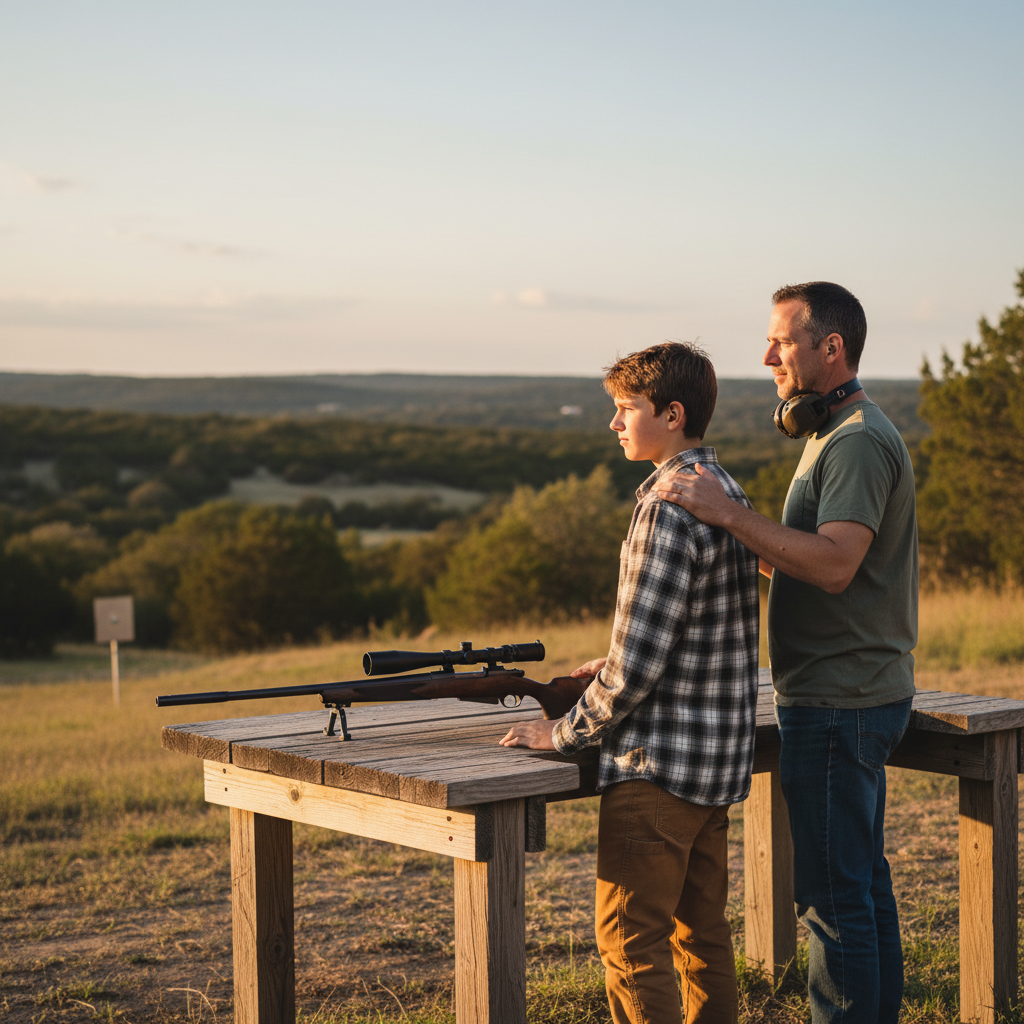
There's a particular quiet that settles over two people when they're both looking downrange at the same target. It's not the absence of sound—ranges are never truly quiet—but the presence of shared focus. When my daughter lines up her sights for the first time each session, the world narrows to just us, the fundamentals, and that target at fifty yards. In that moment, we speak the same language.
"Squeeze, don't pull," I'll remind her, and she'll nod without breaking her sight picture. "Follow through," she'll whisper to herself as the shot breaks. "Call it," I'll ask, and she'll point to where she thinks the bullet went before we check the target. These phrases become our shared vocabulary—not just for marksmanship, but for approaching anything that requires patience and precision.
What strikes me most about shooting together is how it levels the playing field between parent and child. We're both accountable to the same standard. The target doesn't care about age or experience—it only responds to good fundamentals applied consistently. When she shoots a better group than mine, she earns that victory honestly. When I help her work through a problem, it's not because I'm the adult, but because I've been where she is and remember the path forward.
Trust in Its Most Tangible Form
Teaching firearms safety to a child might be one of the most profound acts of trust a parent can extend. When I first handed my daughter a rifle and said, "This is yours to handle responsibly," I was communicating something that words alone couldn't carry: I believe you are capable of serious responsibility.
Children understand this weight intuitively. I've watched her transform at the range—shoulders back, movements deliberate, attention laser-focused. The teenager who might roll her eyes at taking out the trash approaches every aspect of shooting with reverence. She checks and double-checks the chamber. She never lets the muzzle drift toward anything she wouldn't willingly destroy. She treats every firearm as if it's loaded because she's learned that this assumption keeps everyone safe.
That trust creates something between us that extends far beyond the range. A child who has been trusted with a firearm and has consistently honored that trust carries themselves differently. They've proven to themselves—and to you—that they can handle real responsibility. That confidence shows up in other areas: in how they approach their first job, their first car, their first serious relationship.
Learning Patience Together
Teaching someone to shoot demands enormous patience, and learning to shoot requires the same. I'll be honest—there have been sessions where both of us were tested. A persistent flinch that ruins every shot. A group that stubbornly refuses to tighten up despite perfect conditions. The frustration that builds when muscle memory hasn't developed yet and conscious thought gets in the way.
Working through those moments together teaches something about relationship that no classroom can replicate. I've learned to coach without criticizing, to correct without diminishing. She's learned to receive guidance without shutting down, to stay engaged even when progress feels invisible. These skills matter far beyond marksmanship—they're the foundation of every meaningful relationship we'll have for the rest of our lives.
There's a particular moment that stays with me: after weeks of struggling with trigger control, she finally shot a group tight enough to cover with a quarter. The smile that spread across her face wasn't just about the shooting—it was about persevering through difficulty and seeing the work pay off. I was there for that breakthrough, not as someone who fixed her problem, but as someone who refused to let her give up on herself.
The Precision That Travels Home
Shooting rewards doing things correctly—not approximately, not almost, but correctly. A sight picture is either aligned or it isn't. Your breathing is either controlled or it isn't. The trigger breaks cleanly or it doesn't. This pursuit of precision becomes a shared value that travels home from the range.
I watch my daughter apply the same attention to detail she's learned in shooting to other areas of her life. The careful preparation. The focus on fundamentals. The understanding that small details produce big results. When she approaches a challenging school project with the same methodical patience she uses to zero a rifle, I know the range lessons are taking root in places I never expected.
There's a particular pride in watching your child do something difficult with genuine excellence. Shooting offers that moment repeatedly—not the participation-trophy kind of achievement, but earned success that comes from mastering something genuinely challenging.
The Conversations Between Shots
Perhaps the most unexpected gift of shooting together is the conversations that happen in the spaces between strings of fire. Waiting for the range to go cold. Walking downrange to check targets. Cleaning rifles at the end of the session. These moments, when our hands are busy but our minds are free, have given us some of our most meaningful talks.
Without the pressure of eye contact or the formality of a planned discussion, real conversations emerge naturally. Questions about life, relationships, future plans, fears, and dreams flow more easily when we're both focused on a shared task. The range becomes a safe space for both of us—literally and emotionally.
These conversations don't happen because we're at the range; they happen because we've built something together through shooting that creates space for honesty. The trust, patience, and shared achievement become the foundation for deeper connection.
If you're wondering whether shooting together might strengthen your relationship with your child, I can't make that decision for you. But I can tell you that some of my most treasured memories with my daughter have targets hanging on the garage wall as proof they happened. The range gave us a language, a shared standard, and countless quiet moments to discover who we are together.
That's worth more than any perfect group size.