
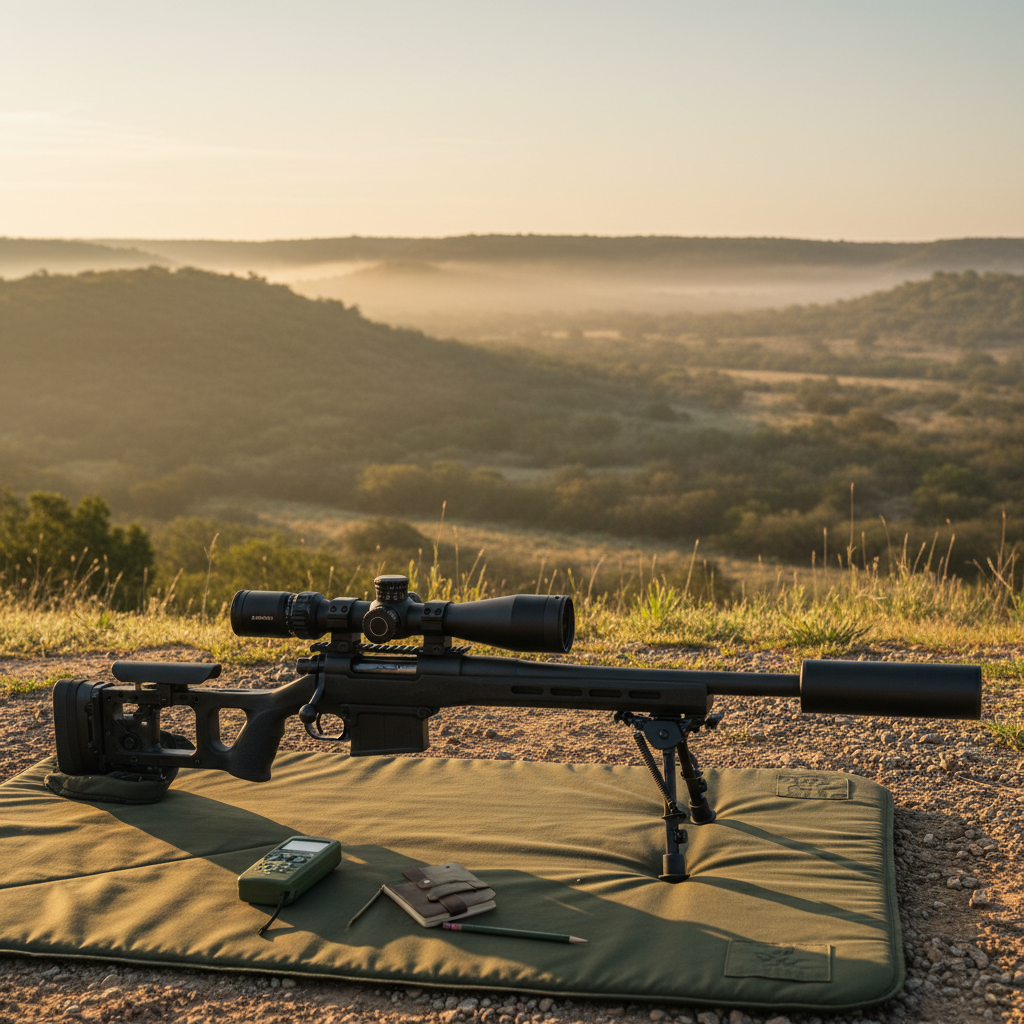
After nearly a century, the $200 federal tax stamp that has stood between American shooters and their suppressors is gone. On July 4, 2025, President Trump signed the One Big Beautiful Bill Act into law, eliminating the tax stamp requirement for suppressors, short-barreled rifles, short-barreled shotguns, and Any Other Weapons effective January 1, 2026.
For those of us who've been shooting for decades, this moment feels almost surreal. The $200 tax hasn't just been a financial barrier—it's been a psychological one. When that tax was set in 1934, $200 represented serious money. In today's dollars, that would be over $4,700. This wasn't designed as a reasonable regulatory fee. It was designed to discourage ownership entirely.
What Suppressors Actually Do—And Don't Do
Before we dive into what's changed, let's address what suppressors actually are, because Hollywood has done us no favors here. Suppressors don't make guns silent. They reduce the sound of a gunshot to hearing-safe levels—or at least closer to them. A suppressed .22 is still audible. A suppressed .308 is still loud enough that you'd want hearing protection in most circumstances.
What suppressors do provide is meaningful hearing protection for you and anyone nearby, reduced muzzle blast that makes shooting more comfortable, less recoil in many cases, and an overall better shooting experience. In Finland and Norway, suppressors are completely unregulated and hunters are encouraged to use them. The American stigma around suppressors has always been more fiction than fact.
Think about it practically: if you're introducing someone new to shooting, especially a young shooter, wouldn't you want every tool available to make that experience as comfortable and non-intimidating as possible? A suppressor is one of those tools.
What Changed—And What Didn't
Here's where we need to be precise, because there's already misinformation circulating about what this law actually does. The tax is gone. The process is not.
If you want to buy a suppressor starting January 1, 2026, you still submit ATF Form 4, still pass a background check, still provide fingerprints and photos, and still wait for ATF approval. The only thing that changed is you don't write a $200 check to the federal government.
This applies to suppressors, short-barreled rifles, short-barreled shotguns, and Any Other Weapons. Machine guns and destructive devices still require the $200 tax stamp—those weren't included in this change.
One reality check: expect longer wait times, at least initially. A surge in Form 4 applications is coming, and the ATF will need time to scale their processing to match demand. If you've been on the fence about suppressor ownership, understand that 2026 might involve longer approval times simply due to volume.
The Legal Fight That's Just Beginning
Eliminating the tax has created an interesting legal situation that's worth understanding. Multiple industry groups—including SilencerCo, Silencer Shop Foundation, Gun Owners of America, and Palmetto State Armory—have filed lawsuits challenging whether the NFA can continue regulating suppressors without the tax.
Their argument is straightforward: the National Firearms Act was always justified as an exercise of Congress's taxing authority. Without the tax, that legal foundation becomes much shakier. The Senate Parliamentarian blocked full deregulation under the Byrd Rule, but these lawsuits argue the current situation—regulation without taxation—may be unconstitutional.
Courts haven't ruled yet, and this will take time. But it's the most significant development in Second Amendment law in a generation, and the outcome could determine whether suppressors remain in the NFA system at all.
What This Means for You
Let's make this practical. That suppressor that cost $1,000 last year—$800 for the can plus $200 for the stamp—now costs $800. For shooters who want multiple suppressors across different platforms, the savings compound immediately.
But the change goes beyond money. There was always a psychological weight to paying a federal tax to exercise a constitutional right. That weight is gone. For hunters who've been considering a suppressor for early morning hunts or property owners who want to shoot without bothering neighbors, the decision just got much easier.
Home defenders get a particularly meaningful benefit. In a defensive situation, you're likely not wearing hearing protection. A suppressed firearm can mean the difference between permanent hearing damage and walking away with your hearing intact.
A New Era for Quiet Shooting
What excites us most about this change isn't just the immediate practical benefits—though those are substantial. It's what this means for the future of shooting culture in America.
More accessible suppressors mean better hearing protection across our community. They mean more comfortable training environments where new shooters aren't overwhelmed by noise. They mean rural property owners can practice more freely without noise concerns. They mean competitive shooters can focus on precision without the distraction of excessive muzzle blast.
The craft of shooting just got quieter, more accessible, and more enjoyable. For those of us who've been waiting nearly a century for this barrier to fall, January 1, 2026 can't come soon enough.
We've always believed that the best shooting experiences happen when every barrier between the shooter and their craft is removed. Today, one of the oldest and most arbitrary of those barriers is finally gone.