
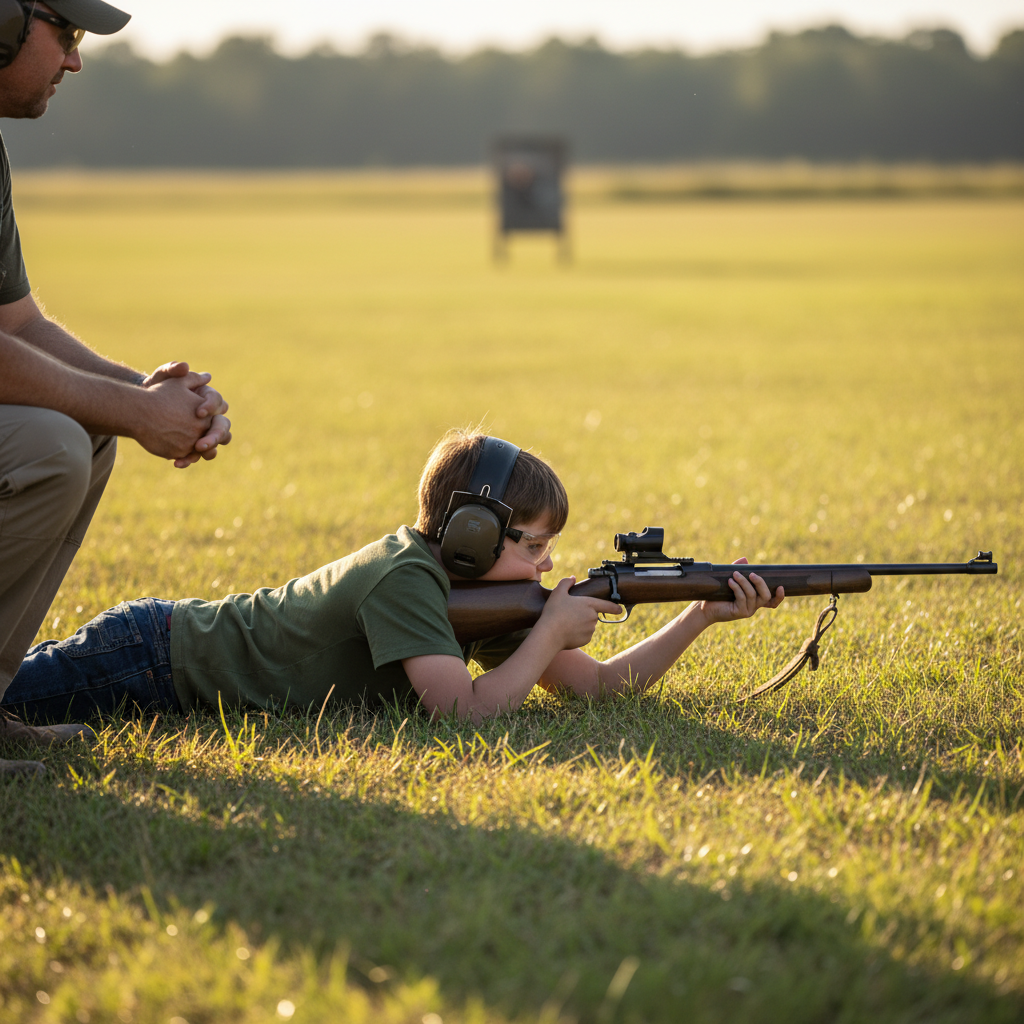
There's a window of opportunity in every young shooter's development that closes slowly but surely as they get older. It's the window where muscle memory forms cleanly, where good habits embed themselves naturally, and where the fundamentals of marksmanship can take root without having to first pull out years of accumulated bad habits.
We've seen it countless times: a twelve-year-old who starts with proper instruction on appropriate equipment will, within a year, be outperforming adults who have been shooting casually for decades. It's not because young people have better eyes or steadier hands – though they often do. It's because they haven't spent years developing a flinch, milking the trigger, or compensating for equipment that was too big from day one.
Safety First Is Not a Cliché – It Is the Foundation
Before we talk about sight picture or trigger control, we need to talk about the four fundamental rules of firearms safety. Not because it's required reading, but because these rules, properly internalized at a young age, become the unconscious foundation for every interaction with a firearm for the rest of a shooter's life.
Treat every firearm as if it were loaded. Never point the muzzle at anything you don't intend to destroy. Keep your finger off the trigger until ready to shoot. Be sure of your target and what lies beyond it. These aren't just rules to recite – they're behaviors that need to become as automatic as looking both ways before crossing a street.
A young shooter who learns these principles before ever touching a trigger develops what we call unconscious competence with safety. They don't have to think about muzzle discipline or trigger finger placement because these behaviors are wired into their motor patterns from the beginning. This foundation of safety becomes the platform everything else builds on.
Right-Sized Equipment Matters More Than People Realize
One of the biggest mistakes we see parents make is starting their young shooter on equipment that's simply too big, too heavy, or generates too much recoil. The logic seems sound – "they'll grow into it" or "might as well start them on what they'll eventually use." But this approach often creates problems that take years to fix.
A .22 LR rifle with a youth stock is not a compromise – it's the right tool for the job. The light recoil allows the young shooter to focus entirely on sight alignment, trigger control, and follow-through without developing a flinch response. The appropriately sized stock lets them achieve a proper cheek weld and natural point of aim without strain.
Red dot optics can be incredibly valuable for young shooters because they eliminate the complexity of front sight, rear sight, and target alignment while the shooter masters breathing, trigger press, and position. Once those fundamentals are solid, the transition to iron sights or magnified optics happens naturally.
We've seen young shooters who mastered fundamentals on a .22 transition to centerfire cartridges with confidence and maintain their accuracy. Those who started on something too powerful often carry a subtle flinch or tension into every shot, even years later.
The Mental Game Starts Young Too
Shooting is as much a mental discipline as a physical one, and young shooters develop both simultaneously. The patience required for proper sight alignment, the focus demanded by consistent breathing, and the discipline of following through on every shot – these aren't just shooting skills, they're life skills.
A young shooter learns to slow down under pressure, to trust their process even when the stakes feel high, and to accept responsibility for every outcome. They learn that consistency comes from doing the same thing the same way every time, regardless of conditions or distractions.
These lessons translate far beyond the range. We've watched young shooters apply the same methodical, process-oriented thinking to academics, athletics, and eventually their careers. The mental discipline of marksmanship – the ability to control breathing, manage stress, and execute under pressure – serves them well in every arena of life.
Competition as an Accelerator
While informal shooting with family builds fundamental skills, organized competition accelerates development in ways that weekend range trips simply cannot match. Programs like 4-H Shooting Sports, the Scholastic Action Shooting Program (SASP), USA Shooting, and local junior leagues provide structured progression, qualified instruction, and the productive pressure of performance.
Competition gives young shooters immediate, objective feedback on their progress. It introduces them to different shooting disciplines, from precision rifle to action pistol, helping them discover where their interests and aptitudes align. Perhaps most importantly, it connects them with a community of peers who share their developing passion for the shooting sports.
A young shooter with a coach, a training schedule, and competition goals develops faster and more completely than one shooting casually. They learn to manage performance pressure, to prepare systematically, and to learn from both success and failure in ways that serve them throughout life.
The Parent's Role – And the Ammunition Question
For parents introducing their children to shooting, consistency is everything. Consistent instruction, consistent expectations, and yes, consistent ammunition. Every unexpected variable – a round that sounds different, feels different, or performs differently than expected – can undermine confidence at exactly the moment when a young shooter is building their relationship with the fundamentals.
This is why quality ammunition matters more with young shooters than many parents realize. ZeroPoint's consistent loads eliminate one significant variable from the equation. When every round performs exactly as expected, the young shooter's experience is defined by their technique and their progress, not by surprises they can't control or understand.
The investment in proper instruction and quality equipment – including ammunition – pays dividends that compound for decades. A young shooter who learns correctly from the beginning carries those skills and that confidence into every shooting situation for the rest of their life. Start them right, keep them engaged, and watch those fundamentals build into genuine expertise that will serve them well beyond their years on the range.